


Nerds unite during The Paradox set at Vans Warped Tour in Washington, DC, on June 13, 2026. Photo by Diara J. Townes
My wrists ached as I quickly wiped my sweaty hands on my damp black t-shirt, the short sleeves rolled up to my shoulders. I locked my elbows and braced my knees as another human body floated above me, blocking out the sun. We were in the gauntlet now.
Blessedly close to the stage barricades, we—the joyous nerds and emo rejects of the early 2000s—had a mesmerizing 10-15 seconds of opening riff “The Middle,” before the bodies came.
The bass and drums of Jimmy Eat World pounded in my chest as heads turned, eyes widening (if not rolling), fingers pointing. Dozens of hands flew up next to mine as we braced the full weight of Millennials living out their punk-rock dreams, crowd surfing at Warped Tour in Washington, DC, June 13 and 14, 2026.

A Warped Tour attendee surfs the crowds during the Jimmy Eat World set on Sunday, June 14, 2026. Photo by Diara J. Townes.
The claustrophobic elation of joy attained, through the sweaty bracing bodies around me, overshadowed by masses of humans taller and bigger than me, with the full awareness that if I couldn't keep it going, someone would pick me up, someone would know I'd slipped, tripped, or fallen.
Barely four miles away, on the South Lawn of the White House, men's bodies were hurtling themselves at each other inside an octagon cage. UFC Freedom 250—billed as America's 250th birthday celebration, held conveniently on the president's 80th birthday—was underway.
Fighters had walked through the Grand Foyer, the Roosevelt Room, the Cabinet Room, past presidential portraits, before making their long walk to the Octagon. One fighter paused in the Oval Office to look at a framed copy of the Declaration of Independence hanging on the wall. He thought it was the original….it wasn’t. The original is at the National Archives, where history is actually kept.
Historians compared the evening to gladiatorial games in Imperial Rome. Only 16% of Americans thought it was appropriate. Closed captioning was sponsored by TrumpCoins.com.

And when UFC heavyweight Josh Hokit won his fight that night, he used his post-victory platform—handed to him on the grounds of the People's House, broadcast to 34 million viewers, sponsored by Bud Light and Ram Trucks and Crypto.com (surprising no one), to look directly into the camera and say: "And lastly… Michelle Obama is a man! Am I right, America?"
Joe Rogan, standing beside him in the ring, said nothing. The sponsors said nothing. The White House said nothing. The president congratulated Hokit the next morning on Truth Social, praising his "speed and power" without a word about what he'd said. This was not Hokit's first time, either.
He'd said it after his last fight, too. And the one before that, about Brittney Griner. When asked to explain himself afterward, Hokit said he thought he was complimenting Michelle Obama.
Two spectacles of humanity: one that held each other up, and one that made sport of bringing each other down. Both, apparently, are America.

Jimmy Eat World performing during Vans Warped Tour on Sunday, June 14, 2026. Photo by Diara J. Townes
America has always been comfortable with this contradiction.
This country was not built on the backs of people who chose to be here. It was built on the broken backs of people who had no choice—enslaved people whose labor built the literal architecture of American wealth and comfort, Native people whose land was stolen, cleared, and renamed, Mexican families dispossessed when we simply redrew borders around their homes. The assumption then, as now, is that victory requires someone else's loss. That dominance is the only language power understands.
The joy we celebrate doesn't arrive clean. It never has. It arrives on broken backs and bloody hands, in the throes of violence and ego and the assumption that winning only counts if someone else is losing.
We just dressed it up in an octagon and called it freedom.
America, at 250, is not a mystery. It is a mirror.
Here's what is genuinely worth celebrating at 250: the radical, world-shifting audacity of the idea itself.
"We hold these truths to be self-evident, that all men are created equal, that they are endowed by their Creator with certain unalienable Rights, that among these are Life, Liberty and the pursuit of Happiness."
In 1776, that sentence was revolutionary. Not because it was true—it wasn't, not fully—but because it dared to say the righteous part out loud.
It created a standard that generations of Americans, explicitly excluded from its protection, have used to hold this country accountable.
Enslaved people cited it. Suffragists cited it. Civil rights leaders cited it. Frederick Douglass cited it. Dr. King cited it.
The document said "all men" and meant "white, land-owning men," but the words outgrew their authors' intentions, and Americans have been fighting to close that gap ever since.
The 13th Amendment abolished slavery. The 14th Amendment granted citizenship to formerly enslaved people. The 15th secured the right to vote regardless of race. The 19th extended that vote to women. The Civil Rights Act. The Voting Rights Act. The Americans with Disabilities Act.

A selfie I took standing outside the country’s Capitol building, post-insurrection. June 2025.
Each one is a hard-won expansion of who this country's founding promise actually includes, and that is worth celebrating. All passed with intention, and now most are facing, if not under, attack.
But what do these celebrations leave out?
The Declaration of Independence is, at its core, a list of grievances. And the final grievance, the climax of the founders' argument for independence, is this:
"[King George III] has excited domestic insurrections amongst us, and has endeavoured to bring on the inhabitants of our frontiers, the merciless Indian Savages, whose known rule of warfare, is an undistinguished destruction of all ages, sexes and conditions."

An image of a historical marker outside the Texas State Capitol in Austin, honoring the Bicentennial of the Declaration of Independence in 1976. Taken October 2024 by Diara J. Townes.
Not taxation. Not representation. Native people.
Rebecca Nagle, citizen of the Cherokee Nation and host of the essential new podcast First America, has spent the last year excavating this history alongside Indigenous scholars and historians. Her conclusion is devastating in its clarity: the hunger for Indigenous land didn't just influence the Revolution—it drove it. The founding fathers' first government failed because Indigenous nations were too powerful. War and diplomacy with Native people are why we have a federal government at all.
"I keep hearing people say, 'This isn't who we are as a country,'" Nagle said. "But what I have learned in the last year is that U.S. history tells a different story."
It does. It always has.
A true list of grievances, and not in its entirety:
Native Americans were slaughtered for their land—99% of tribal lands lost
The systemic cruelty that runs from pre-Civil War brutality straight through mass incarceration's 2.3 million bodies locked in cages today.
Mexicans were dispossessed when the U.S. redrew borders around them in 1848
Slave patrols hunting Black people who were already free, destroying their freedom papers
The kidnapping and re-enslavement of freedmen
Banning the immigration of Chinese laborers and denying them citizenship in the U.S. in 1882
Japanese families caged during World War II, while the U.S. bombed civilians overseas
The napalm America dropped on Vietnamese children.
The "collateral damage" the U.S. rained on Iraqi and Afghan families.
This is the throughline in America's story: the assumption that victory requires someone else's loss, that dominance is the only language power understands, that the bodies of Black and brown and Indigenous and immigrant people exist to absorb the cost of someone else's liberation.
I am a Black woman in America. I am burdened with the charge of holding up a mirror to this country—not by choice, but by my existence. And I am not alone in this mission. Black people, Indigenous people, brown immigrants, the impoverished, the disenfranchised, the queer community, and the differently-abled. We are not the image of glory attained atop the bloody heap of an eight-sided cage on the White House lawn.
This is not a new observation. Frederick Douglass made it in 1852, and it’s never been more relevant.

And yet we are bearing the insults, the targeting, and the removal by a government that has fully leaned into the worst parts of America's identity—the parts our textbooks bypassed, toned down, and our leaders chose to ignore.
America’s Looking Glass
This country has consistently, generation after generation, regardless of the presidential administration, with barely a breath between one era's terror and the next, committed atrocities in plain sight. ICE raids are separating families. Children in cages. Rights stripped. People disappeared. The question is never whether this is who America is. The question is whether this is who America chooses to remain.
The preamble to the Constitution calls for "a more perfect Union." Not a perfect one. The founders built in the mechanism for change because they understood—or at least wrote as if they understood—that the gap between the ideal and the reality would require constant, uncomfortable, sometimes dangerous reckoning to close.
Every expansion of rights in this country came from people who refused to accept the gap. Who named it and marched into it. Who understood, as every person in that crowd at Vans Warped Tour understood, that the only way anyone gets lifted is if someone else holds them up; who chose bodies held up over bodies beaten down.
America at 250 is a mirror, not a monument. What it reflects depends entirely on where we choose to stand, who we're willing to see standing beside us, and how we lift them up.

Evidence of my Punk-Alt-Emo dreams realized at Vans Warped Tour on June 14, 2026. Photo by Damina Townes.
Start with First America, hosted by Rebecca Nagle.

Then, head over to Democracy NOW! for this interview with Princeton University professor, Eddie Glaude, Jr.
Subscribe to The Curious Scout today!
For those that don’t know me…I’m Diara J. Townes ~ a researcher, scientist, journalist, and new North Carolina resident.
Be sure to check out the web version for more!
The Latest for the Curious
Scout’s Screen
My digital obsession/recommendation for the month.
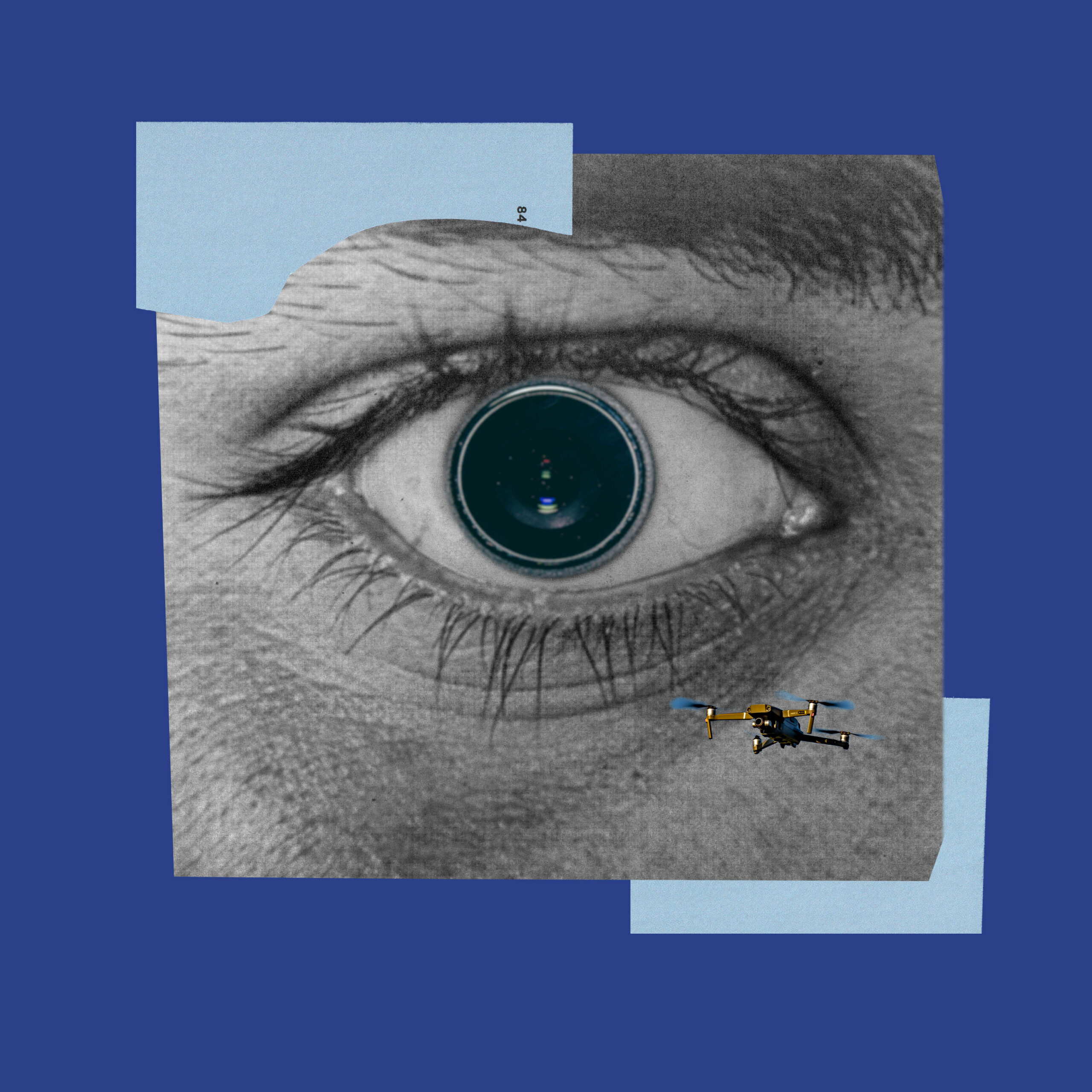
The B Block
Curated articles and events relevant to my commentary and other broad-stroke national issues.

And just in case you missed my byline last month:
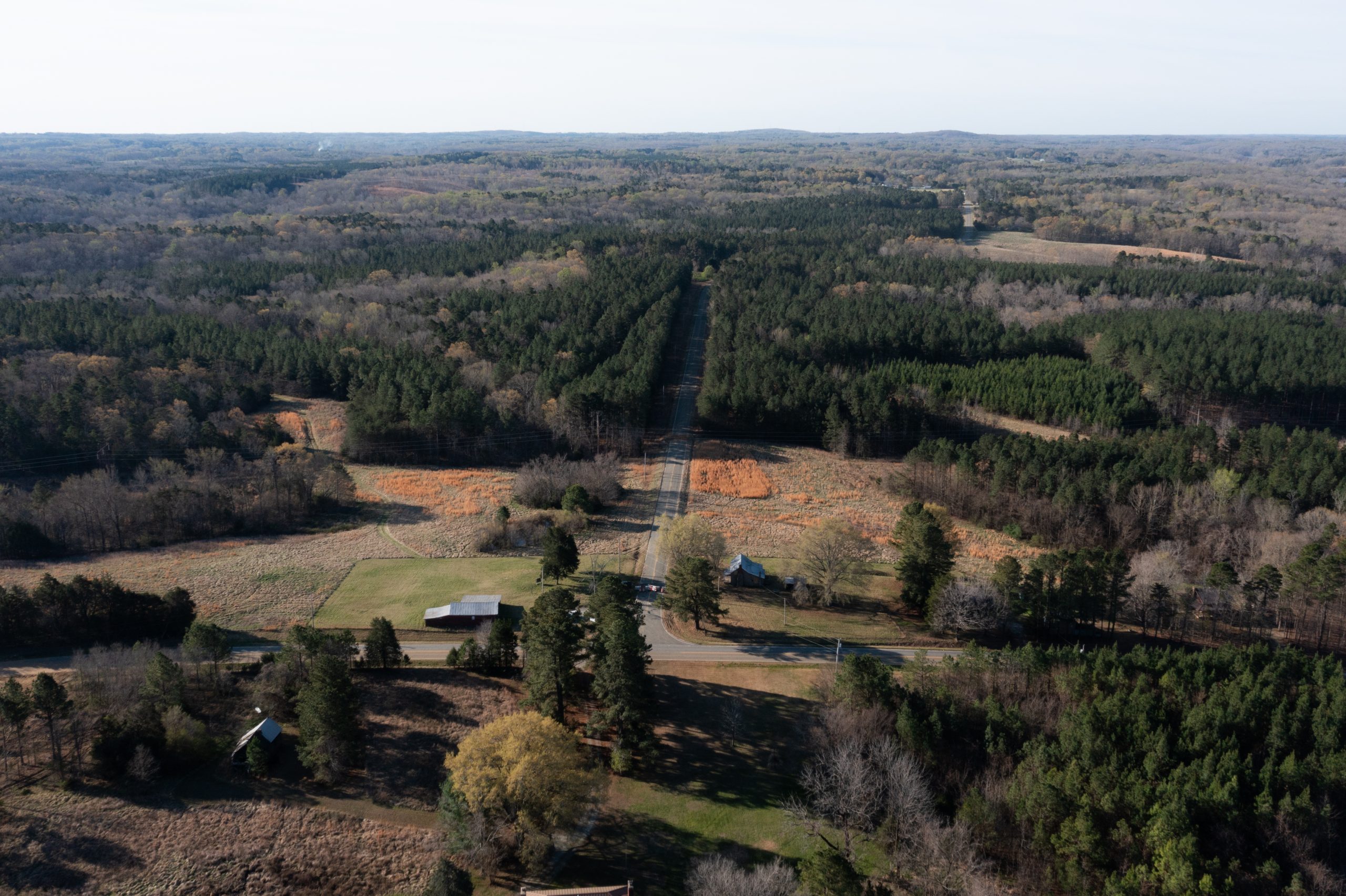
That’s all for now!
Journalism isn't just about reporting in a community; it's about listening, asking, and finding answers together.
Thanks for being here. Please share this newsletter with others who are interested in local stories, cultural commentary, and how independent journalism gets made.
Let’s get curious together.
Diara J., aka The Curious Scout
Disclaimer: This isn’t a Sandhills News, Rant or NC Local product—it's The Curious Scout, my personal newsletter exploring culture, politics, and moral courage through community-centered storytelling.