


Candidate financial disclosure forms are not optional in North Carolina, but dozens of hopefuls heading into the March 3 primary appear not to know that. Or have forgotten to file them.
The North Carolina State Ethics Commission is a state agency that administers and enforces the state’s ethics and lobbying laws for many public officials and lobbyists.
The State Ethics Commission expected 793 Statement of Economic Interest (SEI) filings from new candidates by January 20 (and incumbents for the 2026 election cycle by April 15).

In collaboration with investigative data journalistAudrey Nielsen, creator of the SoFullDisclosure project, a nationwide public records effort that makes state-level financial disclosure data searchable for reporters, we found that on February 18, 53 candidates were still missing their required disclosures; 48 of them were running for North Carolina House and Senate seats.
The forms require candidates to disclose financial interests, real estate holdings, and, interestingly, whether they are aware of any other information they “believe may assist the Ethics Commission” in advising them concerning their compliance with the State Government Ethics Act.

A screenshot of the NC State Ethics Commission portal, where candidates can submit their disclosure forms electronically. https://ethicssei.nc.gov/efile
All candidates are expected to adhere to the deadline; otherwise, they will incur a $250 fine.
But interviews with seven candidates in central and eastern North Carolina who missed the deadline revealed a system in which some never received the form, others didn't know it was required, and several faced technical difficulties submitting it online.
The communication breakdowns appear to span multiple agencies: county boards of elections that distribute materials to candidates, the State Board of Elections that coordinates the process, and the State Ethics Commission that collects and publishes the forms.
“I Didn’t Receive It”
Charles M. Taylor, a Republican candidate for NC House District 51 in Lee County, filed his SEI form on February 12, the same day I contacted him about the missing disclosure.
"I didn't receive it the first time; I didn't have it by mail at all," Taylor said. He explained that the State Ethics Commission emailed the form on February 11, but also said "there was an error in my email address" that delayed the notification.
Taylor, who serves on the Sanford City Council and previously served on the state Mining and Energy Commission, said he was familiar with SEI filing requirements from his prior public service. During the interview, he questioned the story's purpose and suggested that I had ulterior motives. "You act like you're on a witch hunt," he said, adding that he was “disenchanted” with my questioning.

Taylor is currently embroiled in an intraparty fight in Lee County. In early February, he sent a letter to the chair of the North Carolina Republican Party demanding the removal of Lee County GOP Chairman Jim Womack over alleged ethics violations. Taylor's accusation: that Womack was leveraging his position as party chair to boost his wife's campaign, Sherry Lynn Womack, who is Taylor's Republican primary opponent in House District 51.
The conflict has split the local party, with some members defending the Womacks and others accusing Taylor of mudslinging.
Tashera McDuffie, Taylor's Democratic opponent in the same race, also filed late. When contacted, she immediately emailed her completed form on February 12.
“I’ve Never Gotten It”
Angelene Mitchell, a Republican candidate for State Senate District 5 in Pitt County, said she also never received the form when she filed in December.
"When I did fill it out, the only thing I remember filling out was the quarterly report," referring to campaign finance paperwork required during the candidate filing process.
Mitchell ran for the same seat in 2024, and the only Statement of Economic Interest on record for her is from that race.
Janet Turner, who became director of the Pitt County Board of Elections in January, said the office did receive a question from one candidate, though she didn't name Mitchell, about the SEI form.
"We had one who contacted us about needing the form. So I sent her the form, but other than that, we've not been contacted by anyone saying that they've missed the form, that they didn't have the form, well, other than her," Turner said.
The discrepancy between the Mitchell and Turner accounts suggests the form wasn't distributed during the filing process.
Turner explained that her office distributes SEI forms to certain candidates based on materials provided by the State Board of Elections. "It's an ethics sheet that was sent to us by the state board, and we hand it out to Senate candidates, House candidates, and maybe one or two other candidates if they came in to file that we had to give it to," she said. "The state board actually puts the file together. They sent us the file, and we gave it out to the candidates as they filed."
Turner took over as director in January 2026, after the December filing period had ended. This is her first state election cycle in the role.
“Does This Mean I Can’t Run?”
Other candidates said they tried to file but encountered obstacles.
Cheryl Caulfield, a Republican running for State Senate District 18, representing Wake & Granville Counties, attempted to file but encountered technical difficulties with the online submission system.
Laura Macklem, who handles public relations for Caulfield's campaign, said Caulfield made multiple attempts to upload the form before it finally worked on February 28.
"She finally got it to work this morning," Macklem texted, along with a photo of the submitted form. Macklem also relayed that the Ethics Commission had told Caulfield that primary candidates had been given an extension. While the January 20 transparency deadline had passed, primary candidates technically have until March 4—the day after the election—to file without necessarily incurring a $250 fine.
For some first-time candidates, the form itself was news.
Tony Spears, a Democrat running for NC House District 6 in Harnett County, said he was unaware the SEI form was required when I reached out on February 20. "First time dealing with this," Spears said. "Does this mean I can't run?"
"The State Board of Elections told us to do new things; I don't remember seeing this form."
Spears, who also serves as Harnett County NAACP president, expressed frustration with the candidate filing process. "You've got to be around the right people who are willing to help," he said.
Three days later, on February 23, Spears hand-delivered his completed SEI form to the State Ethics Commission office in Raleigh.

A screenshot of NC House District 6 Candidate Tony Spears’ written Statement of Economic Interest form, as uploaded by the NC State Ethics Commission. Source: NC Ethics search.
Harris Walker, a Democrat running for NC House District 25 in Nash County, said his campaign had switched managers about a month earlier. The SEI filing "fell through the woodwork."
Walker works in the private sector in advanced energy but spent years working in national security—both for and with the government—before returning to the private sector three years ago. He said he learned about the missing form early in the week, before I contacted him.
When reflecting on the challenges of running as a Democrat in his district, he said, “It is a different world down here. It is better than it was, but nowhere near where it needs to be.”
“I Didn’t Realize I needed to File”
Even candidates familiar with the requirement missed the deadline.
Dan Kiger, a Republican running for NC House District 90, which includes Surry County and parts of Wilkes County, has filed SEI forms annually since 2015 due to his position on the Criminal Justice Information Network Governing Board.
But he didn't realize he needed to file a separate form as a candidate.
As of February 28, Kiger's 2026 candidate SEI form had not appeared in the database, despite having been contacted more than a week earlier.
Destin Hall, the current Speaker of the NC House running for reelection in District 87, filed his 2026 SEI form on February 27—the same day I called his office. (Hall's previous filing was dated June 24, 2025.)
A representative said he would connect me with the appropriate person on Hall's team to discuss the late filing, but no one from the Speaker's office followed up.
Bruce Davis, a Democratic candidate for NC House District 60, did not respond to multiple phone calls and emails. As of February 28, no SEI form appeared in the database for Davis.
An additional 16 candidates not contacted for this story still had no forms filed with the ethics commission.
The Ethical Process
Kathy Edwards, executive director of the State Ethics Commission, explained the process and timeline for how candidates are supposed to learn about their SEI filing obligations.
According to Edwards, the system relies on coordination between multiple agencies.
When candidates file their notices of candidacy with local county boards (or with the State Board of Elections in some cases), they also provide contact information. Local boards send that information to the State Board of Elections, which then shares it with the State Ethics Commission so the commission can notify candidates who are required to file Statements of Economic Interest.
The commission sends its first round of communications to candidates in early January, Edwards said, with the January 20 deadline clearly stated. Candidates who miss that deadline receive a follow-up email notifying them they are overdue and warning that failure to file by March 4, the day after the primary, will result in them being brought before the commission in May to face a potential $250 fine.
If you want to run for state office, you, the candidate, should make every effort to know what the law is going to require of you, to have the honor of serving."
"Despite everyone's best efforts, they just aren't aware of the requirements," Edwards said. She noted that new candidates face a compressed timeline between filing in December and the March primary, during which they must also navigate campaign finance reporting and other legal requirements.
"Regular filers and incumbents have an infrastructure that can help them comply; they have a system. Candidates are on their own. We add additional outreach for them,” she continued. “It requires more staff time."
When asked whose responsibility it is to ensure candidates are informed, Edwards drew a line. "My personal opinion—if you want to run for state office, you, the candidate, should make every effort to know what the law is going to require of you, to have the honor of serving," she said. She added that campaign finance information is readily available on the State Board of Elections website.
"It's primarily their responsibility to get this right. It's our obligation to do what we can and remind them."

A screenshot of the NC Ethics Commission website explaining penalties for candidates who fail to file required financial disclosures.
The Ethics Commission does not track candidates' party affiliations and operates under a bipartisan commission, Edwards said. And while the $250 fine and May commission hearing serve as enforcement mechanisms, filing late doesn't disqualify candidates: their names still appear on the ballot, and they can still run in the general election.
As of late February, the commission had whittled the list of non-compliant candidates from about 53 total filers down to roughly 30 people who still hadn't filed.
Edwards also noted that some confusion stemmed from a recent change to the law. The SEI filing deadline used to be in late December, but the commission requested that it be moved to January so candidates could report financial information for the full previous calendar year.
"Not all local boards of elections are aware of that change," Edwards said. A few candidates attempted to file in 2025 using 2024 information based on that incorrect guidance, but the commission worked with the State Board of Elections to correct the issue. All three candidates affected by that miscommunication have since filed.
While the $250 fine and the commission hearing in May serve as enforcement mechanisms, Edwards emphasized that the real goal is to get forms filed before voters make their decisions. "It's important the public has access before they make their decisions," she said. "It also reduces agency resources to have to call people."
The State Board of Elections did not respond to requests for comment about their coordination process or how they communicate filing requirements and deadlines to newly filed candidates.

Low-level accountability, high-stakes impact
In the two weeks between first contact and the March 3 primary, most of the candidates I contacted filed their forms. The experience underscores both the fragility of transparency systems that rely on multi-agency coordination and the role local journalism plays in holding candidates accountable to legal requirements that state agencies struggle to enforce consistently.
Statement of Economic Interest forms exist to give voters insight into who their candidates are beyond campaign messaging: what financial interests they hold, what real estate they own, what business relationships might create conflicts once they're in office, making laws or presiding over courtrooms.
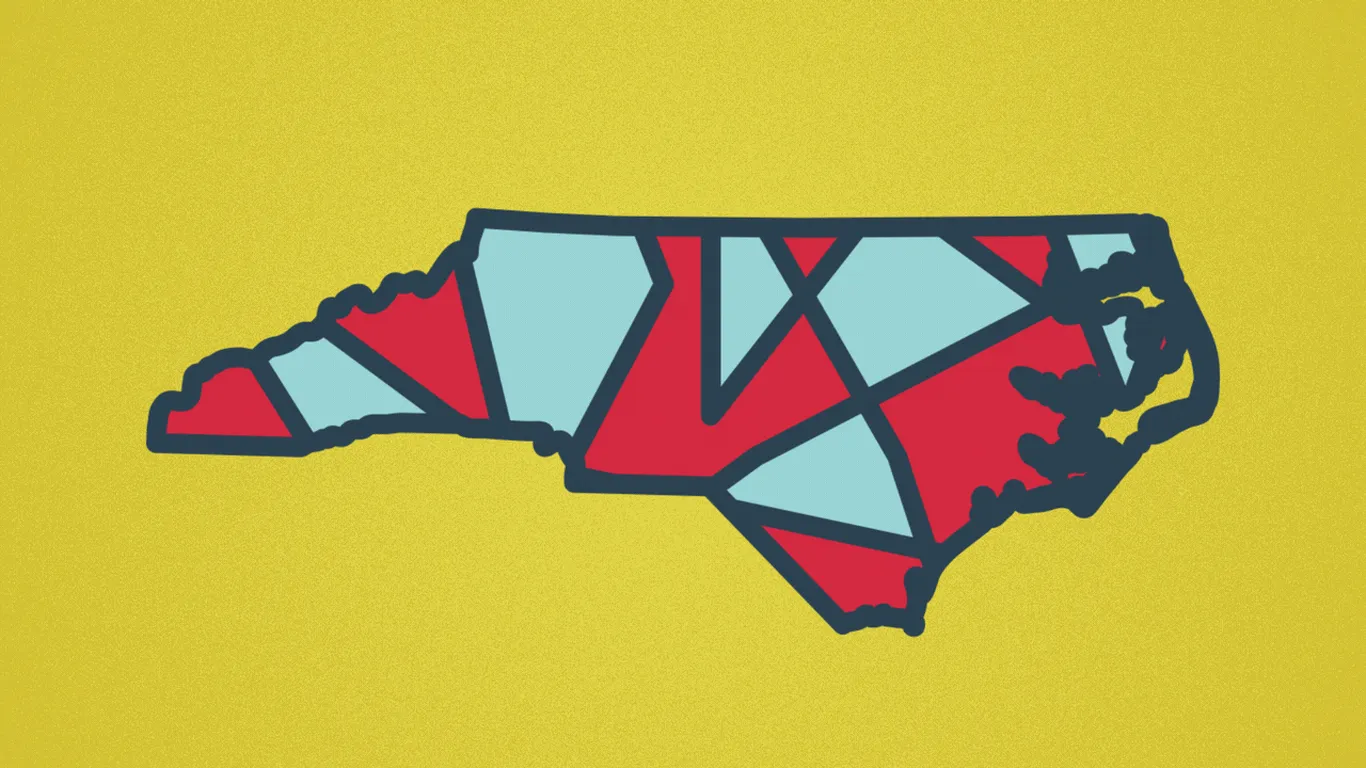
In a state where gerrymandering has made most legislative districts safely Republican or safely Democratic, primary elections often determine who will hold power.
Transparency in those primaries matters.
Early voting ended today, and some candidates still haven’t filed. North Carolina voters cast ballots without the financial disclosures the law requires them to see. The forms will eventually make their way into the public database, creating the paper trail and follow-ups for the primary winners, but the question remains whether the system is designed to inform electoral choices or simply document them after the fact.
The candidates interviewed for this story weren't intentionally flouting the rules. Most filed within days of being contacted, and several expressed genuine frustration with a process they found confusing or inaccessible.
But their experiences reveal how easily accountability mechanisms can fail when the infrastructure to support them—clear communication, technical systems that work, local party organizations that help candidates navigate requirements—is unevenly distributed across counties and candidates.
UPDATES AS OF MONDAY, MARCH 2:
SEI forms for Dan Kiger, Harris Walker and Cheryl Caulfield were officially uploaded to the SEI database.
The Ethics Commission did not have a form for Bruce Davis.
Subscribe to The Curious Scout today!
At NICAR 2026?
Come to our session on Thursday, March 5, at 9 AM!
Stay tuned for more links and resources related to
A Nationwide Public Records Project by investigative data journalist Audrey Nielsen.
This is a free, open-source national resource that makes state-level financial disclosure data accessible to reporters doing accountability work.
That’s all for now!
Journalism isn't just about reporting in a community; it's about listening, asking, and finding answers together.
Thanks for being here. Please share this newsletter with others who are interested in local stories, cultural commentary, and how journalism gets made.
Let’s get curious together.
Diara J., aka The Curious Scout
Disclaimer: This isn’t a Sandhills News, Rant or NC Local product—it's The Curious Scout, my personal newsletter exploring culture, politics, and moral courage through community-centered storytelling.